

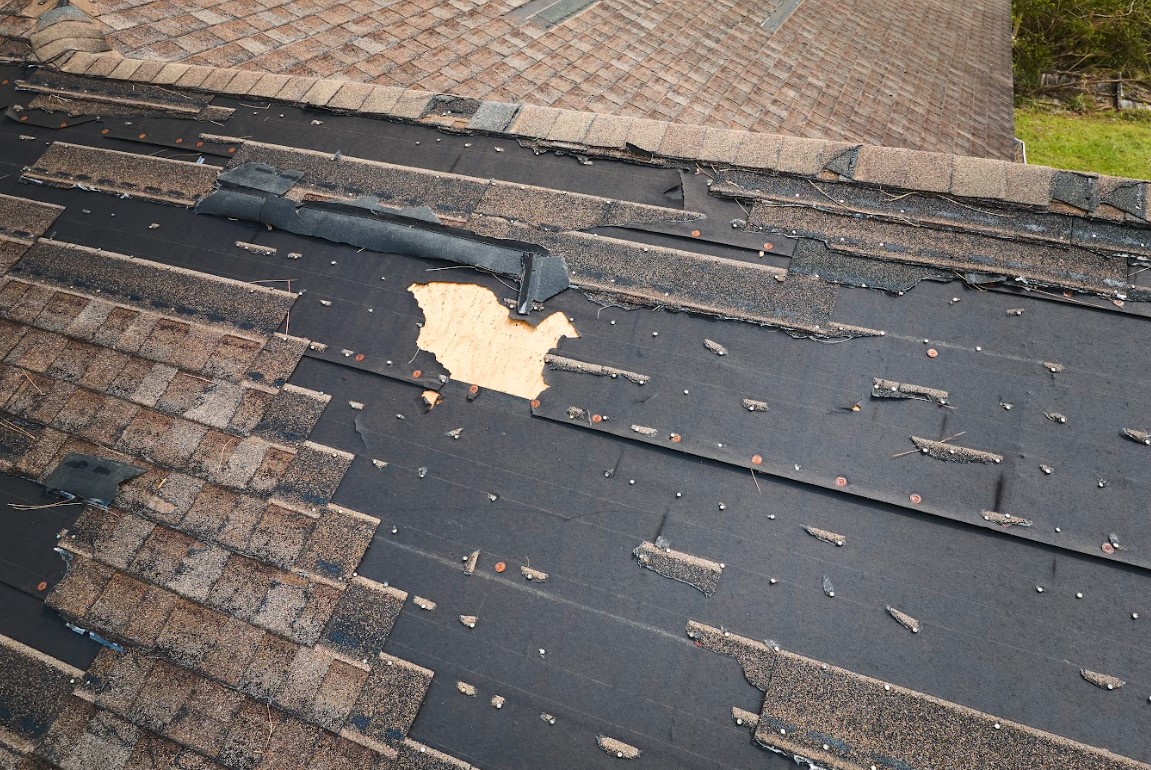
The storm is over. The wind has stopped. You walk outside and the first thing you do is look up. Maybe you see a few missing shingles. Maybe there is a tree branch sitting where it should not be. Maybe everything looks fine from the ground but something feels off. That feeling is worth paying attention to.
Wind, hurricanes, and tornadoes do not just damage roofs. They expose them. Every weak spot, every aging shingle, every improperly sealed flashing joint gets tested in a matter of minutes. And what you do in the hours and days after a major storm has a direct impact on how much damage your home sustains, how smoothly your insurance claim goes, and how quickly your life gets back to normal.
This is your step-by-step guide for what to do right now.
Quick Takeaways
- Safety comes first: do not access your roof yourself after a major storm
- Documentation is your most powerful tool when filing an insurance claim
- Call a roofing professional before you call your insurance company
- Temporary protection like tarping can prevent further damage while repairs are arranged
- Storm damage that is not addressed quickly tends to get significantly more expensive over time
Is It Safe to Go Outside and Assess the Damage Right After a Storm?
Not until you have checked a few things first.
The storm may have passed, but the hazards have not. Before you step outside, take a few minutes to look from your windows and doorways. Check for downed power lines, which can be live even when they are not sparking. Look for standing water near electrical panels or outlets. Scan for structural damage to your home that might make it unsafe to move through certain rooms.
Once you are confident it is safe to step outside, stay on the ground. Do not attempt to climb onto your roof to assess damage yourself. Roof surfaces are unpredictable after a storm. What looks like a solid surface may have compromised decking underneath. Wet shingles are slippery. And a second injury on top of storm damage is the last thing your family needs.
Walk the perimeter of your home from a safe distance and look up. Take a slow, deliberate pass around every side of the structure and note what you can see from the ground.
What Should You Do First When Documenting Storm Damage?
Pull out your phone and start shooting before you touch anything.
Before anything is moved, cleaned up, or covered over, document everything. This step is non-negotiable if you plan to file a homeowners insurance claim, and you almost certainly should.
Here is what to photograph and video:
- The full exterior of your home from all four sides
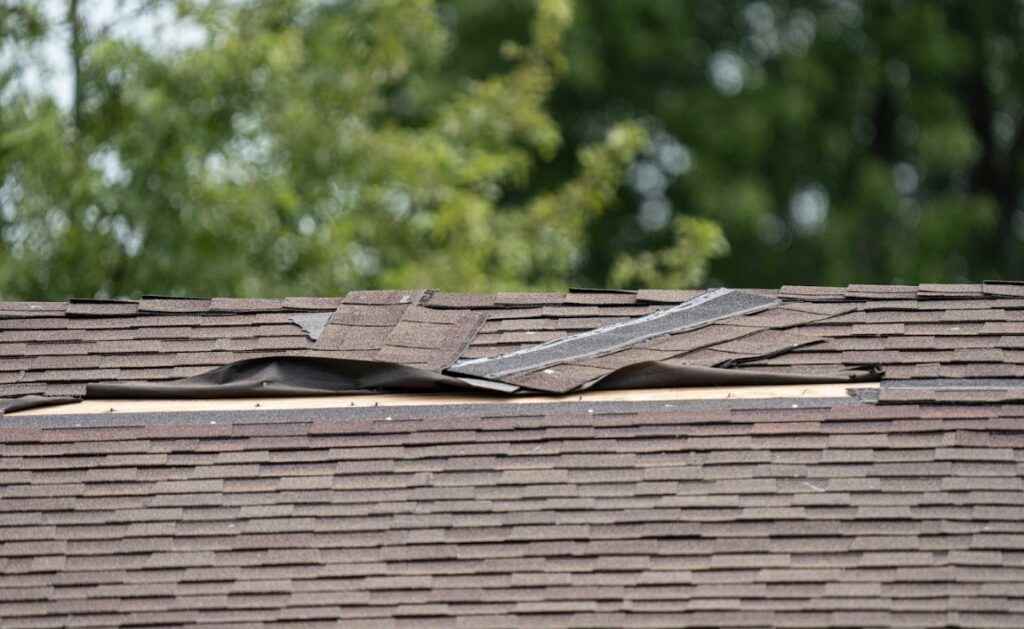
- Any visible roof damage, including missing shingles, lifted sections, or punctures
- Damaged or displaced gutters, downspouts, and soffits
- Debris on or near the roof, including tree branches, fence pieces, or other projectiles
- Damage to siding, windows, doors, and any other exterior components
- Interior water stains, wet insulation, or ceiling damage if water has already gotten inside
Take wide shots for context and close-up shots for detail. If you have a video doorbell or security cameras, save that footage immediately. Many systems overwrite old recordings within 24 to 72 hours.
Date and time stamps matter. Most smartphones embed this data automatically, but double-check your settings to make sure it is enabled.
Should You Call a Roofer or Your Insurance Company First?
Call your roofer first. Here is why that order matters.
This is the step most homeowners get backwards. The instinct is to call insurance right away, but a little patience here pays off significantly.
When you call your insurance company first without an independent assessment, you are relying entirely on their adjuster to document and evaluate your damage. Adjusters are professionals, but they are also working for the insurance company. Having your own inspection report from a qualified roofing contractor gives you an independent, documented account of exactly what happened to your roof.
Our storm damage repair team works with homeowners through this process regularly. We inspect the damage, provide a detailed written assessment, and help you understand what you are looking at before anyone starts talking numbers. That report becomes part of your claim and gives you a much stronger position during the adjustment process.
After you have that inspection in hand, then call your insurance company to open a claim. Most policies require you to report damage promptly, so do not delay more than a day or two. But go in prepared.
What Can Be Done to Protect Your Home While You Wait for Repairs?
Temporary protection is not optional. It is essential.
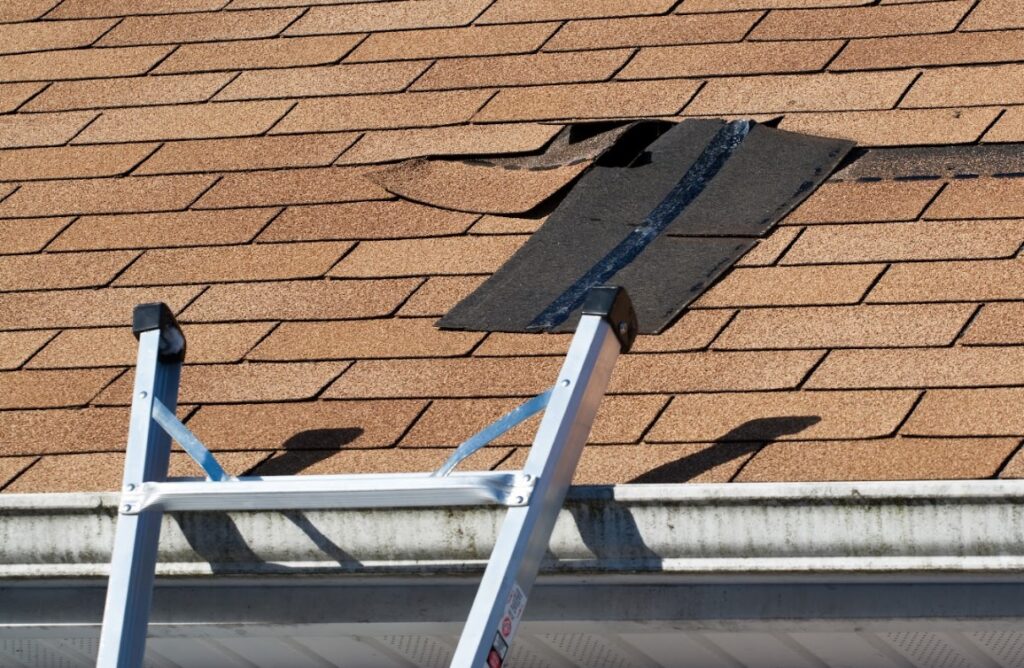
Roof repairs do not always happen the same day, especially after a widespread storm event when contractors are in high demand across the region. In the meantime, your home is still exposed. Any opening in your roof, no matter how small, is an invitation for water to work its way deeper into the structure.
Emergency tarping is one of the most effective forms of temporary protection available. A properly installed tarp covers damaged areas and prevents additional water intrusion while permanent repairs are scheduled. It is not a long-term fix, but it can be the difference between a contained repair and a full-on interior rebuild.
At MARS Roofing, we respond quickly after major storm events because we understand that waiting is not just uncomfortable, it is costly. Every hour of exposure after a storm is an hour that moisture has to move deeper into your decking, insulation, and framing.
Keep your receipts for any emergency measures you take. Temporary protective measures are often reimbursable through your homeowners policy as part of your claim.
How Do Wind, Hurricanes, and Tornadoes Damage Roofs Differently?
Each one hits differently, and knowing the difference helps you know what to look for.
Wind damage, hurricane damage, and tornado damage may all end up looking similar on the surface, but the mechanisms are different and that affects what needs to be inspected.
Straight-line wind typically lifts shingles from the edges inward, peeling them back progressively. The damage is often patterned and easier to trace. Hurricane-force winds bring sustained pressure over a longer period, which tests every fastener, seal, and connection point on your roof system. The FEMA National Hurricane Center notes that roofing failures during hurricanes are most often caused by uplift at the roof-to-wall connection, not just surface shingle damage.
Tornado damage is in a category of its own. Tornadoes introduce debris at extremely high speeds, which means puncture damage, structural displacement, and complete section loss are all possible even in a glancing strike. If a tornado passed near your property, assume the damage is more extensive than what you can see from the ground.
According to the National Weather Service, wind events causing structural damage to homes occur hundreds of times per year across Maryland and Virginia combined. That frequency is exactly why having a trusted roofing partner before you need one is so important.
The Part Nobody Talks About: What to Do When Talking to Your Insurance Company
Go in informed, go in documented, and go in with professional support.
When you do make that call to your insurance company, have everything ready. Your documentation, your roofing contractor’s inspection report, your policy number, and a clear timeline of when the storm hit and when you discovered the damage.
Be straightforward and factual. Describe what you observed, what was documented, and what temporary measures were taken. Avoid speculating about cause or cost. Let the documentation speak.
Ask your adjuster specifically what the next steps are, what the timeline looks like, and what additional documentation they need from you. Get every follow-up in writing or via email.
If the initial claim amount feels low or does not reflect the full scope of damage your contractor identified, you have the right to request a re-inspection or work with a public adjuster. A qualified roofing contractor, like our residential roofing team, can also provide supplemental documentation to support a revised estimate.
Storm Questions, Straight Answers: What Homeowners Ask Us Most
Will my homeowners insurance cover wind and hurricane damage?
Most standard homeowners policies cover sudden wind and hurricane damage to your roof. Some policies in high-risk coastal areas have separate hurricane deductibles, so check your specific policy language. Tornado damage is typically covered under the windstorm provision of a standard policy.
What if I wait a few weeks before calling a roofer?
Waiting significantly increases the risk of secondary damage. Water that gets in through even a small opening can spread into insulation, framing, and drywall quickly. It also weakens your insurance claim, since it becomes harder to prove damage was storm-related rather than the result of deferred maintenance.
How do I know if my roof needs full replacement or just repairs?
Age, scope of damage, and the overall condition of your roofing system all factor in. If your roof is under 15 years old and the damage is localized, repairs are usually sufficient. If the damage is widespread or your roof was already aging before the storm, replacement is often the smarter long-term investment. A professional inspection gives you the clearest answer.
Can storm damage affect my attic even if I do not see ceiling stains?
Yes. Water can enter through damaged areas and travel along rafters or insulation before showing up on a ceiling. Attic inspections after major storms are important for catching this kind of hidden moisture before it becomes a mold or structural problem.
How soon can MARS Roofing get out to my home after a storm?
We move fast after storm events because we know time matters. Contact us as soon as it is safe to do so and we will schedule your inspection as quickly as possible. Emergency response and temporary protection are available when the situation calls for it.
First Comes the Storm. Then Comes the Plan. We Handle the Rest.
Storms do not give you a warning, but your response to them does not have to be improvised. Knowing what to do in the first 48 hours puts you ahead of most homeowners and sets you up for a faster, smoother recovery.
MARS Roofing has been serving Maryland and Northern Virginia since 2014. We have helped hundreds of homeowners navigate storm damage, insurance claims, and roof repairs with honesty and without the runaround. Our team is GAF certified, BBB A+ rated, and built for exactly these moments.
If your home just went through a storm, do not wait and hope it is fine. Get eyes on it from someone who knows what they are looking at. Schedule your free inspection today or call us at (240) 319-7311. We will come to you, assess the damage, and give you a clear picture of exactly what your home needs next.