
Gutter Styles Explained: K-Style, Half-Round, and Box Gutters Compared
Quick Answer: Which Gutter Style Is Right for Your Home?
Let’s start with what actually matters. When water is not properly managed around your home, it does not simply disappear. It creates problems that build over time, often in places you do not immediately see.
If you have ever stood outside during a heavy rainstorm in Maryland and watched water spill over your gutters, you have already seen why understanding different gutter styles is so important. Choosing between K style gutters, half round gutters, and box gutters is not just about appearance. It is about how your home handles water day after day, season after season.
Each of these gutter styles is designed to solve a different problem. The key is knowing which one fits your home.
In this guide, you will learn:
- How common gutter styles perform in Maryland weather conditions
- The real differences between K style, half round, and box gutter systems
- What factors influence the right choice for your home
- How to avoid common issues that lead to drainage problems
If you want clear answers based on real conditions, MARS Restoration can help with a professional inspection and straightforward recommendations.
Why Gutter Styles Matter in Maryland
To understand why these gutter styles are compared so often, it helps to step back and look at the environment your home is dealing with.
Homes across Maryland experience a combination of heavy rainfall, humidity, and seasonal temperature changes. Over time, these conditions place constant stress on gutter systems. Not all gutter styles respond to that stress in the same way, which is why choosing between options like K style gutters, half round gutters, and box gutters becomes so important.
When the wrong system is in place, the results tend to follow a pattern:
- Water overflows during storms
- Roof edges and fascia begin to deteriorate
- Siding absorbs moisture
- Drainage issues develop around the foundation
These are not random problems. They are often tied directly to using a gutter style that does not match the home’s needs.
Key Gutter Styles Explained
With that context in mind, it becomes easier to understand how each gutter style is designed to perform.
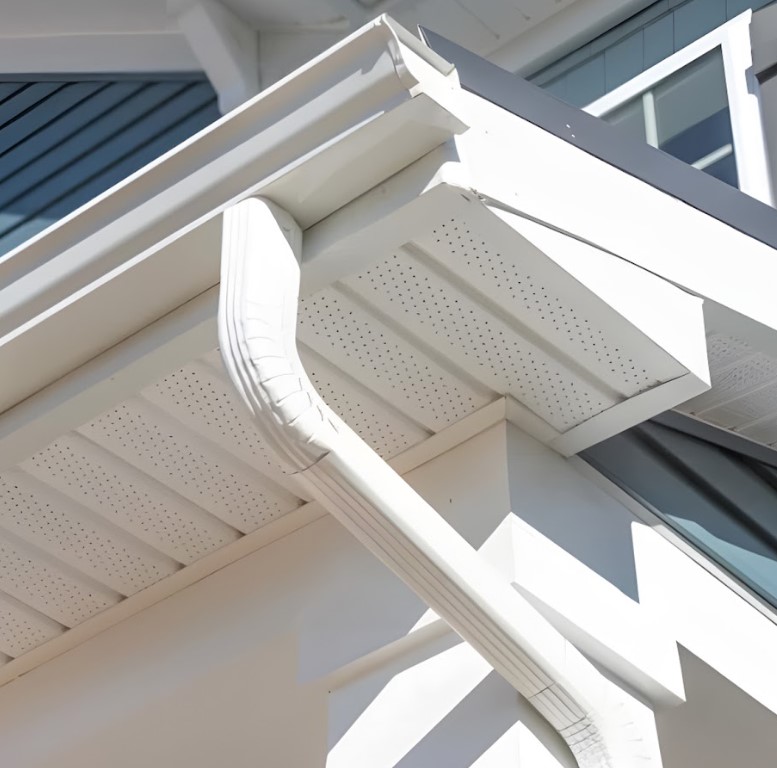
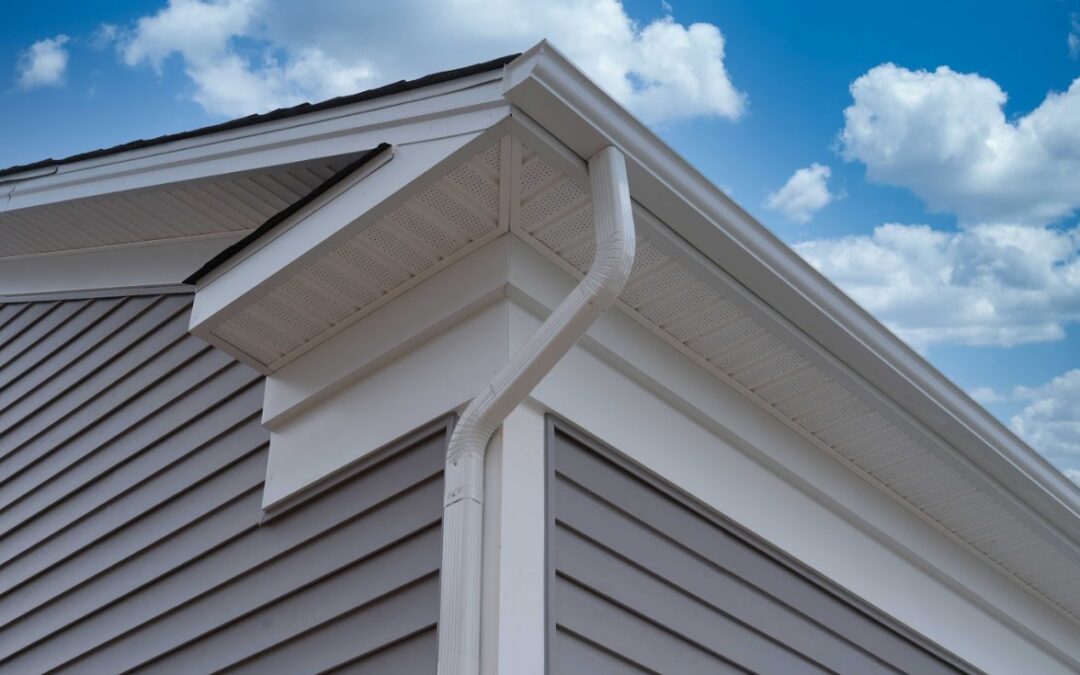
K style gutters are the most common choice for residential homes. Their shape allows them to handle higher volumes of water, which makes them well suited for the rainfall patterns seen across Maryland.
Half round gutters offer a different approach. Their smooth, curved design allows water to flow more freely, which helps reduce debris buildup and simplifies maintenance.
Box gutters are built for capacity. These systems are often integrated into the structure of the roof and are designed to handle large amounts of water, making them common on larger homes or commercial buildings.
Local Conditions That Impact Gutter Performance
When you connect these designs to real conditions in Maryland, the differences between gutter styles become even more important:
- Heavy rain increases the need for higher capacity systems
- Tree coverage raises the risk of clogging
- Freezing temperatures affect drainage flow
- Storms test both durability and attachment
This is why comparing gutter styles is not just helpful. It is necessary.
What to Know Before Choosing a Gutter System
Now that the role of different gutter styles is clear, the next step is understanding how to choose the right one for your home.
Budget Considerations
Each gutter style comes with a different level of investment, and that investment often reflects performance.
- K style gutters are typically the most cost-effective and widely used
- Half round gutters tend to cost more due to materials and installation requirements
- Box gutters usually involve the highest cost because of their size and structural integration
Looking at cost alone, however, does not tell the full story. The goal is to match the system to your home so you avoid costly issues later.
Installation Requirements
The way each gutter style is installed plays a major role in how well it performs.
K style gutters are relatively straightforward, but they still require proper pitch to function correctly. Half round gutters demand more precision to maintain smooth water flow. Box gutters require structural planning, which makes proper installation even more critical.
Permits and Design Constraints
In some cases, especially with older or historic homes, certain gutter styles may be required or preferred. This can influence your decision before installation even begins.
Material Options
While materials like aluminum, copper, and steel affect durability, it is still the gutter style itself that determines how water is managed.
What Size Gutters Work Best for Maryland Homes?
As you compare gutter styles, it is important not to overlook sizing. Even the best gutter style can fail if it is not sized correctly.
Across Maryland homes, 5-inch and 6-inch gutters are the most common.
- 5-inch systems are often paired with standard K style gutters on average-sized homes
- 6-inch systems are typically used when more capacity is needed, especially with larger roofs or steeper pitches
In many situations, homeowners believe they have chosen the wrong gutter style when the real issue is that the system is undersized. This is why gutter style and size must always be considered together.
K Style vs Half Round vs Box Gutters: What’s the Difference?
With the foundation in place, the next step is to look more closely at how these gutter styles compare in real-world conditions.
K Style Gutters: The Most Practical Choice
K style gutters are widely used because they offer a balance between capacity, cost, and availability.
They are designed to:
- Handle higher water volumes during storms
- Fit a wide range of residential homes
- Provide reliable performance without complex installation
For many homes across Maryland, this makes K style gutters the starting point in any comparison.

Half Round Gutters: Efficient and Low Maintenance
Half round gutters approach water management differently. Their curved shape allows water to move more smoothly, which can reduce debris buildup over time.
This results in:
- Improved flow
- Less clogging
- Easier maintenance
While they may not handle as much water as K style gutters, they solve a different problem, which is why they remain a strong option.

Box Gutters: Built for Maximum Capacity
Box gutters are designed for situations where standard gutter styles are not enough.
They:
- Handle the largest volumes of water
- Are often built into the structure of the home
- Require careful design and installation
Because of their capacity, box gutters are often used on larger homes or buildings where water management is a primary concern.
Side-by-Side Comparison
| Feature | K Style Gutters | Half Round Gutters | Box Gutters |
| Water Capacity | High | Moderate | Very High |
| Maintenance | Moderate | Low | Moderate |
| Cost | Lower | Medium | High |
| Appearance | Decorative | Traditional | Minimal |
| Installation | Standard | Specialized | Complex |
Looking at these differences side by side helps clarify why these gutter styles are often compared. Each one is built to address a specific need.
Are K Style Gutters Better Than Half Round Gutters?
K style gutters are better than half round gutters when the priority is managing higher volumes of water. This is one reason they are more commonly used on homes throughout Maryland.
At the same time, half round gutters offer smoother water flow and tend to collect less debris, which can reduce maintenance over time.
This comparison highlights an important point. Choosing between gutter styles is not about finding a single “best” option. It is about choosing the right solution for your home.
Do Box Gutters Require More Maintenance?
Box gutters do require more maintenance, largely because of how they are built into the structure of the home.
When issues develop, they can be more difficult to access and repair. However, their ability to handle large volumes of water makes them essential in certain situations.
This reinforces a key idea in comparing gutter styles. Each option comes with trade-offs, and those trade-offs need to match your home’s needs.
Which Gutter Style Is Best for Maryland Homes?
By this point, the differences between gutter styles should be clear.
- K style gutters are the most common because they balance cost and performance
- Half round gutters are often chosen for their smoother flow and lower maintenance
- Box gutters are used when maximum capacity is required
The best gutter style is the one that aligns with your home’s structure, water flow, and long-term expectations.
How Gutter Style Affects Your Home’s Appearance
While performance is the priority, it is also worth considering how different gutter styles affect your home’s overall look.
- K style gutters blend well with most modern homes
- Half round gutters are often used on traditional or historic properties
- Box gutters are typically less visible and more focused on function
This is another layer in the decision-making process, especially when balancing performance and design.
Do Gutter Guards Make a Difference?
Gutter guards can improve how all gutter styles perform, particularly in areas with heavy tree coverage.
Across Maryland, clogged gutters are a common issue due to leaves and debris. When buildup occurs, even the best gutter style can struggle to function properly.
Adding gutter guards helps:
- Reduce debris accumulation
- Improve water flow
- Lower maintenance needs
They are not a replacement for proper design, but they are a valuable addition to any gutter system.
What to Expect During a Gutter Inspection
Before choosing between gutter styles, it is important to understand how your current system is performing.
During an inspection, MARS Restoration evaluates:
- Overall gutter condition
- Drainage efficiency
- Signs of overflow or failure
- Whether your current gutter style and size are appropriate
This process connects everything discussed in this guide back to your home, helping you make a confident decision.
Contact MARS Restoration to schedule an appointment today!
Deep Dive: Materials, Durability, and Long-Term Performance
To fully understand gutter styles, it helps to look at how they perform over time.
In many homes, the issue is not just the gutter style itself. It is how the system was sized, installed, and maintained.
Common problems include:
- Overflow at corners
- Standing water
- Gutters pulling away from the home
These issues can affect K style gutters, half round gutters, and box gutters alike if they are not properly matched to the home.
Material Performance
Each gutter style can be built from different materials, but the design determines how water is managed.
How MARS Restoration Solves These Problems
By focusing on:
- Matching the right gutter style to the home
- Ensuring proper sizing and pitch
- Installing systems designed for Maryland conditions
Pros and Cons Summary
K Style Gutters Pros
- High capacity
- Cost-effective
K Style Gutters Cons
- More prone to debris buildup
Half Round Gutters Pros
- Easier maintenance
- Smoother flow
Half Round Gutters Cons
- Lower capacity
Box Gutters Pros
- Maximum capacity
Box Gutters Cons
- Complex installation
- Higher cost
Each of these reinforces why understanding gutter styles is essential before making a decision.
Common Questions About Gutter Styles for Maryland Homes
As you compare different gutter styles, including K style gutters, half round gutters, and box gutters, these are the most common questions homeowners ask when deciding which system is right for their home.
What are the most common gutter styles used in Maryland?
The most common gutter styles used in Maryland are K style gutters, half round gutters, and box gutters. Each style is designed to handle different water volumes and structural needs, which is why they are the primary options homeowners compare.
Which gutter style handles heavy rain best?
The gutter style that handles heavy rain best is typically box gutters due to their high capacity, while K style gutters also perform well for most residential homes.
Are half round gutters better than K style gutters?
Half round gutters are better than K style gutters for reducing debris buildup, while K style gutters are better for handling larger volumes of water.
Do I need permits to replace gutters?
Replacing gutters may require permits depending on the project and location, especially when changing gutter styles or structure.
How long do gutters typically last?
Gutters typically last between 20 and 50 years depending on the material and how well the chosen gutter style matches the home.
Can gutters improve drainage around my home?
Gutters improve drainage by directing water away from your home, and choosing the right gutter style improves how effectively that happens.
How do I know if I need new gutters?
You may need new gutters if your current system is not managing water properly, which often points to the wrong gutter style or improper installation.
Conclusion: Choosing the Right Gutter Style for Long-Term Protection
When you look at the full picture, it becomes clear why these gutter styles are so often compared.
K style gutters, half round gutters, and box gutters each serve a specific purpose. The key is choosing the one that aligns with your home’s needs and the conditions it faces.
MARS Restoration helps homeowners make that decision with clear guidance and proper installation, ensuring the system performs as intended.
If you are considering new gutters, schedule your gutter inspection today and make sure your home is properly protected.