Feb 13, 2023 | Blog
If you have leaks and water stains in your attic, more shingle debris in your gutters than usual, or even moss or other plant growth on your roof, it’s time to consider getting a roof replacement.
With so many roofing material options to choose from these days, the process of planning for a new roof can be overwhelming, to say the least.
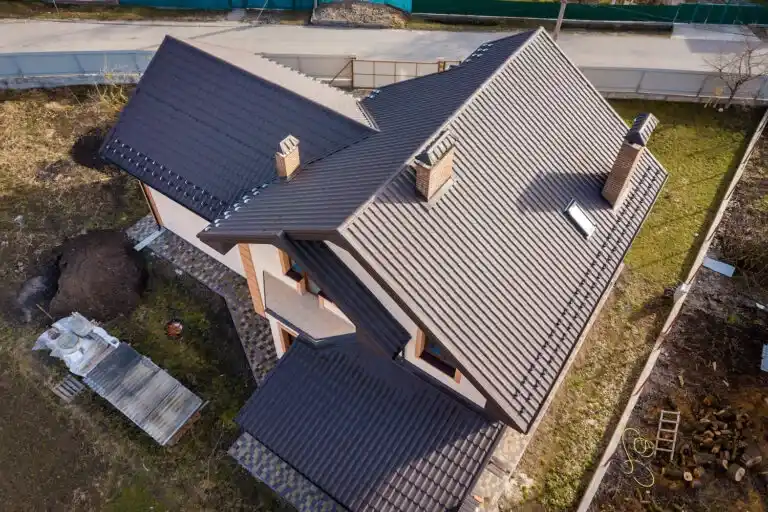
Metal panels and asphalt shingles are two of the most common roofing materials on the market today, and many homeowners want to know the upsides and downsides of each of these materials. Here, we break down the advantages and disadvantages of getting a metal roof vs shingles to replace your current roof.
COST OF EACH ROOFING MATERIAL
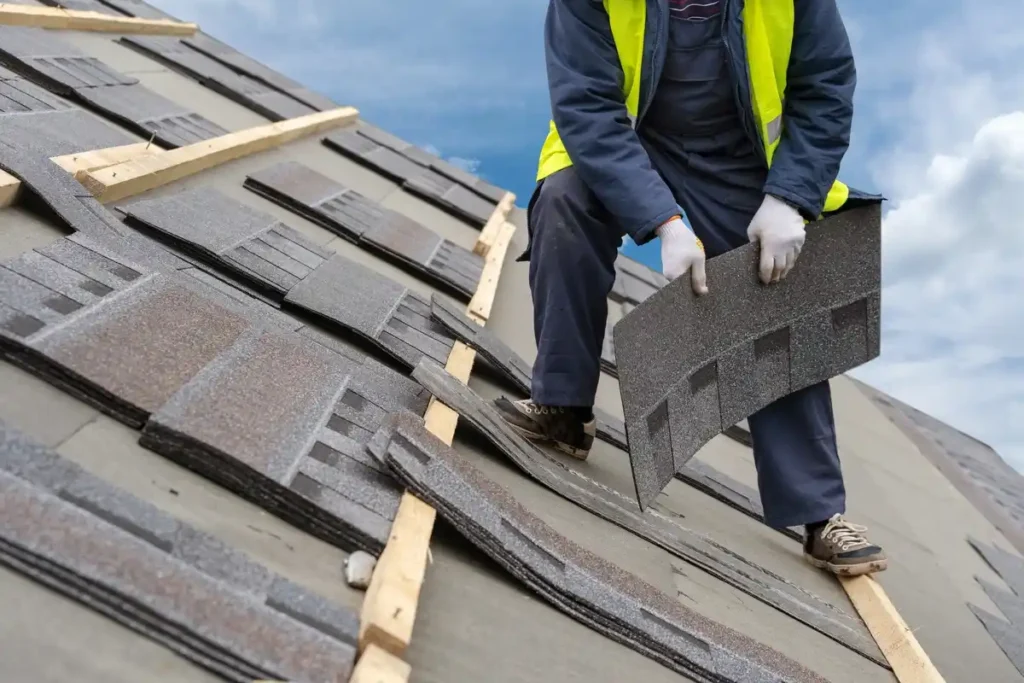
It isn’t for nothing that asphalt shingle roofs became so popular; affordability is a huge part of their appeal. Shingle roofing tends to cost around $1 to $6 per square foot, resulting in a total roof cost of around $10,000.
Metal roofing prices, on the other hand, are quite a bit higher than the upfront cost of asphalt shingles. While prices depend on your location and the current cost of materials, metal roofs can cost $10 or more per square foot or about $20,000 for a whole roof replacement.
While it seems like asphalt is the cheaper of the two materials, there’s more to it than initially meets the eye. You’ll likely only need to purchase a single metal roof in your lifetime, but because of the typical lifespan of asphalt shingles (explained in the next section), you might need to redo your asphalt roof multiple times. If you have the cash available and plan to stay in your current home for more than 5-10 years, the initially higher cost of metal roofing actually becomes a lower cost than asphalt shingles in the long run.
DURABILITY AND LIFESPAN
What metal lacks in short-term affordability, it more than makes up for in longevity. Barring severe weather events or other emergencies, you can expect your roof to last 50 years or more (depending on the type of metal you use, your roof might even last 100 years). Compared to the 25-year maximum lifespan for most asphalt shingles, it’s easy to see how a metal roof becomes the less expensive option in the long run.
Metal roofs also tend to be more durable than asphalt shingles. In extreme weather conditions like strong wind and hail, asphalt shingles are more susceptible to damage than metal roofs. Metal is also more resistant to snow and ice accumulation than asphalt.
This, in addition to asphalt being the more absorbent of the two materials, means that if you live in a climate that has multiple season changes, asphalt shingles may absorb water and expand and contract throughout the year. This erodes the quality of the material over time, and in rare cases, may even cause it to crack.
INSTALLATION TIME
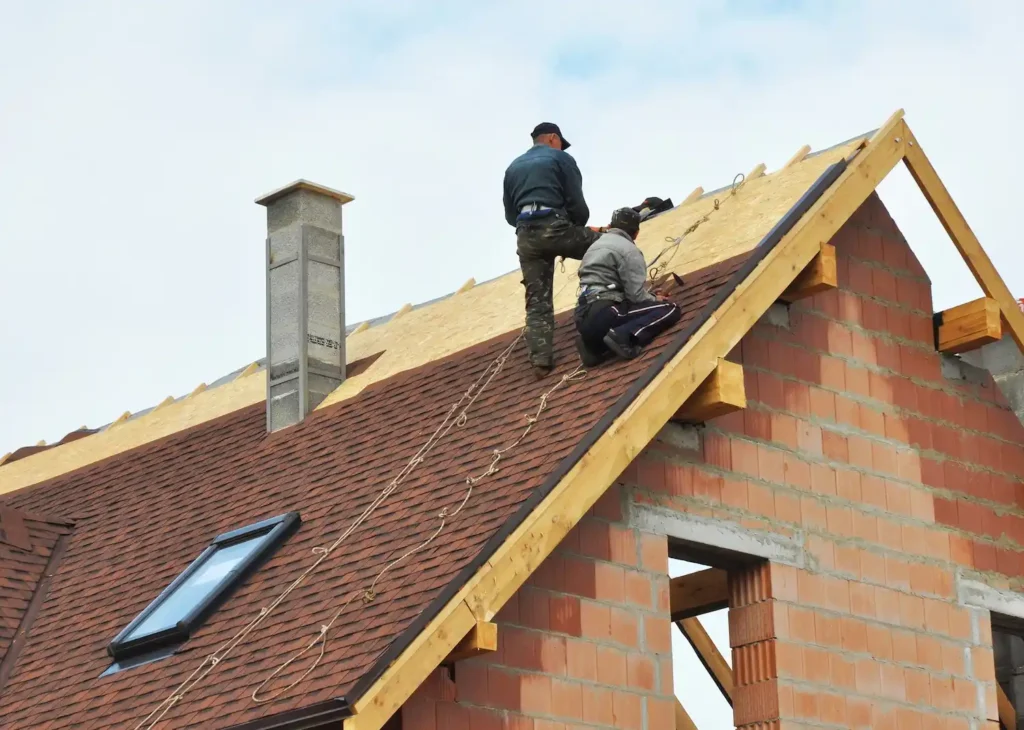
While an asphalt roof may take a day or two to install, a metal roof may take nearer to a week to be completed. The more exacting nature of a metal roofing project also means that you may have to wait a bit to get an appointment with a contractor who has the skill necessary to work with metal roofing, whereas most contractors should be able to handle asphalt shingles. (Luckily, we’re more than happy to take on either kind of project for you here at Mars Restoration.)
AESTHETICS AND APPEARANCE
When considering purchasing metal roofing for their home, many homeowners are worried about ruining their home’s curb appeal; in the relatively short time they’ve been on the market, metal roofs have gained a reputation for looking cold, industrial, and unsightly.
However, metal roofing options have come a long way since they first became available for residential use. As you probably know, you can choose between many kinds of metal for your roof, including copper, aluminum, zinc, and steel. However, you might not have known that you can also choose between many different styles for your metal roofing:
- Corrugated metal
- Standing seam
- Stamped metal
- And more!
Each of these materials and styles of metal roofing comes in a variety of colors, and some are even built to emulate the look of shingles, tiles, and other kinds of roofing! No longer do you have to compromise between having an attractive roof and reaping the quality benefits that metal roofing has to offer.
Asphalt shingles also have similar aesthetic options. They come in various colors and styles. You can even choose multi-color shingles to add depth to the look of your roof, giving you near-infinite options to choose from for your roof’s appearance.
MAINTENANCE
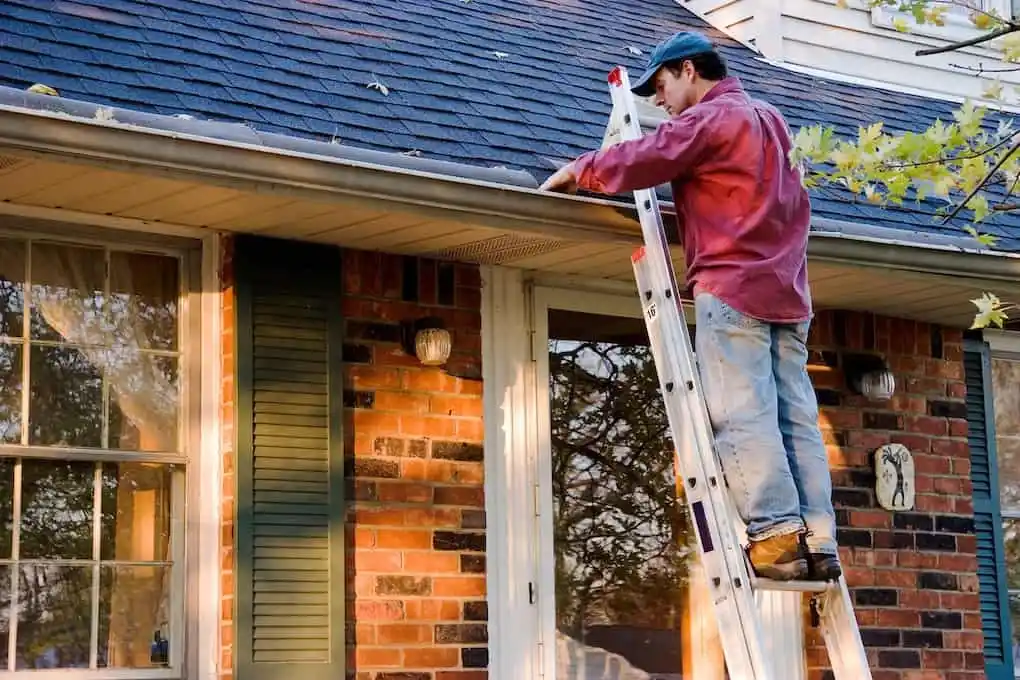
We’ve come to one of the more dreaded parts of home ownership: roof maintenance. While you may not enjoy thinking about this chore, it’s an important part of maintaining the long-term health of your home.
For both kinds of roofs, you’ll need to perform routine maintenance tasks like clearing debris, cleaning out the gutters, and visually inspecting your roof for wear and tear. Beyond these basic tasks, though, metal requires little or no maintenance in most circumstances. Depending on the style of metal roof you have, exposed fasteners may need to be replaced as they rust and degrade over time, but the roof panels themselves shouldn’t require much upkeep from you.
Asphalt shingles, on the other hand, will need at least some maintenance over their lifespan. Some shingles may become damaged or fall off, requiring replacements to be put on in their place. Additionally, the flashing, sealants, and other auxiliary components of the roof will need repair and replacement before the shingles reach the end of their lifespan.
CLIMATE AND WEATHER
Metal roofs are reflective, which means they’re great at keeping heat out of your home. Asphalt shingles work very well to retain heat. So, in cool climates, installing a metal roof might increase your heating costs, while putting on an asphalt roof in warm climates will take more energy to keep your home cool. You can combat these issue with proper insulation, however.
Metal roofing offers the most fire resistance of any roof type. It’s also extremely durable against:
- Hailstorms
- Strong winds
- Moisture
An asphalt shingle roof will likely succumb to these environmental pressures, requiring at least a few repairs over its lifespan.
ENERGY EFFICIENCY
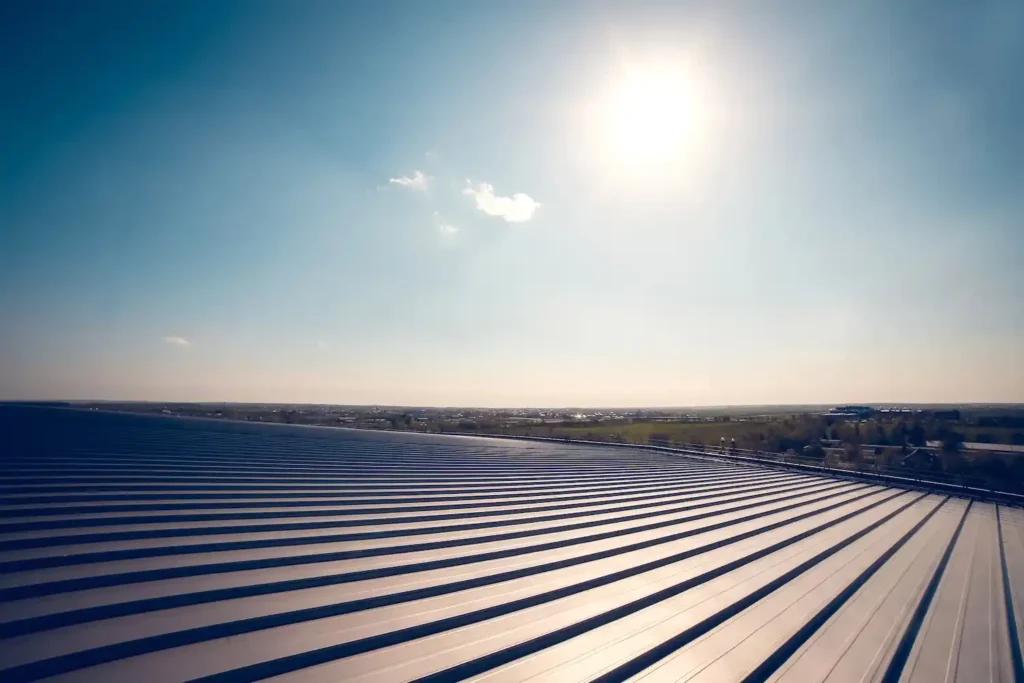
As mentioned earlier, metal roofing will keep your home cool throughout the year, while asphalt shingles will keep your home warm. Depending on which climate you live in, one roofing material may lead to more energy savings than the other.
ENVIRONMENTAL IMPACT
Did you know that asphalt can be recycled? For a while, it was thought that asphalt had to go to the landfill because it’s an oil-based product. However, as long as you live in an area with the appropriate recycling facilities, recycling asphalt shingles is completely doable. Once the asphalt is separated from the other materials in the shingles, it can be reused for paving projects. Metal roofing panels are, of course, even easier to recycle than asphalt and can then be used for a variety of purposes, depending on the kind of metal the panels were made from.
Unfortunately, this doesn’t necessarily make asphalt an environmentally-friendly product, as asphalt is a byproduct of the refinement of oil. Since nonrenewable resources have to be used to create asphalt in the first place, metal roofing is the way to go if you want to reduce your home’s overall environmental impact.
INSURANCE RATES
Because of the durability and long lifespan of most metal roofs, some insurance companies offer discounts on home insurance premiums to homeowners who choose to install a metal roof. However, because of the higher upfront costs of metal roofs, some companies will increase your premium to cover the high anticipated cost of materials should you need another roof replacement.
You’ll need to check with your insurance company to determine how your rates will change with a metal roof, if at all. Asphalt shingles likely won’t affect your insurance costs in either direction.
IN REVIEW: PROS AND CONS OF ASPHALT SHINGLES VS. METAL
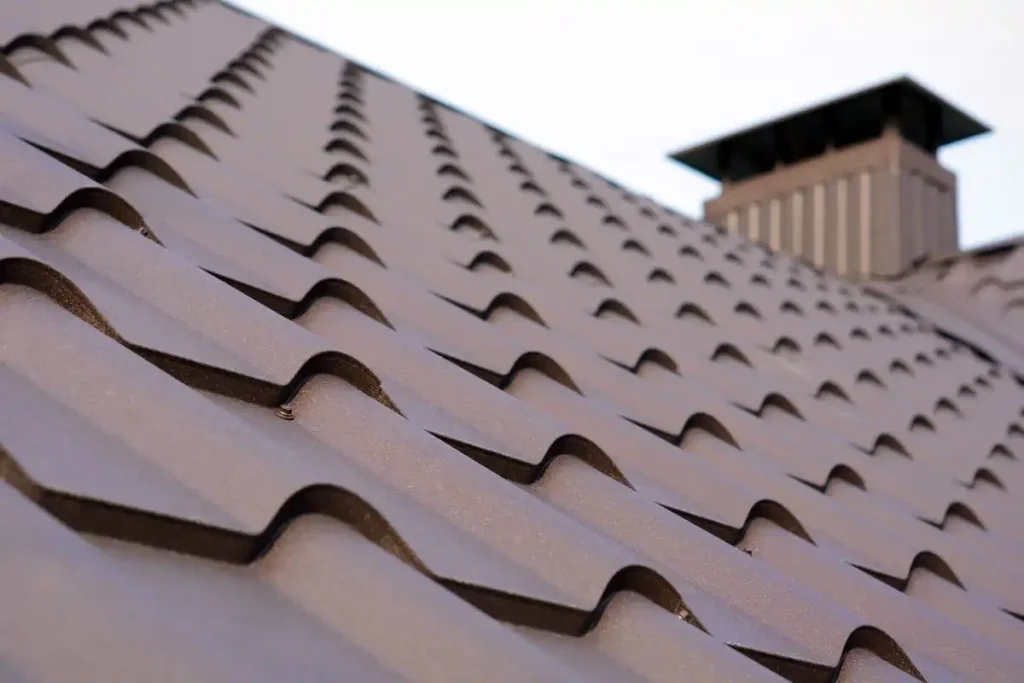
As you can see, both asphalt shingles and metal roofs have both advantages and disadvantages.
✅ Pros of Asphalt Shingles
- Low installation cost
- Quick to install
- Many aesthetically-pleasing appearance options
- Great at keeping warmth inside the home
🚫 Cons of Asphalt Shingles
- Only last 15-25 years
- Require regular maintenance
- Not environmentally-friendly
✅ Pros of Metal Panels
- Last 50+ years
- Many aesthetically-pleasing appearance options
- Require little to no maintenance
- Very durable against extreme weather
🚫 Cons of Metal Panels
- High initial materials cost
- Require specialized knowledge to install
- Might affect insurance rates
And these are just two of the available roofing materials on the market; other materials like clay, concrete, slate, and wood have their own pros and cons.
METAL ROOF VS. SHINGLES: WHICH SHOULD YOU CHOOSE?
The right choice of roofing materials depends on your finances, your climate, and your long-term home ownership goals. Asphalt shingles and metal each serve their own purpose, and determining the right choice is entirely up to you.
Ready to get started on your new roof replacement? Reach out to Mars today to learn how our roofing professionals can help you with your metal or asphalt shingle installation!

Feb 6, 2023 | Blog
Moss on a roof is a real eyesore for homeowners, and it can also damage roofs. If left unchecked, moss growth can lead to a huge headache down the line. The good news is that there are several methods that you can use to remove troublesome moss from a roof quickly and effectively.,Read on for helpful tips on how to get rid of moss on roof surfaces.
WHAT IS MOSS? 🌱
Before delving into how to get rid of moss, let’s discuss what moss growth is and why you should remove it from your rooftop. Moss is a type of plant that can quickly spread over your roof and cause damage. Moss absorbs moisture and grows in areas with lots of humidity.
As a result, it creates an ideal habitat for mold, mildew, and other organisms to grow. In order to maintain the condition and integrity of your roof, it’s essential to remove moss that has grown on it. By removing the moss, you’ll not only improve the appearance of your roof, but also save money on energy costs. Professional roofing treatment is recommended to ensure the job is done properly and efficiently.
However, if you want to remove the moss yourself, here’s how to get rid of moss on roof surfaces:
1. MOSS TREATMENTS
Moss removal treatments involve the application of a chemical solution to the affected area. The chemicals penetrate deep into the surface, killing existing moss and preventing new growth. This treatment is recommended for optimal results.
To do this method, go onto your roof and spray the chemical solution onto the moss-affected areas. Before using the moss remover, be sure to read the instructions carefully. In most cases, the chemicals will kill the existing moss and prevent new growth.
Although chemicals do a great job of removing dead moss from roof shingles, this isn’t a treatment you should do yourself. It’s best to hire a professional, like Mars Restoration, to perform the job in order to avoid any harm or damage. The last thing you want is to risk the health and safety of yourself or your family members.
2. PRESSURE WASHING
Pressure washing is a simple way to get rid of a moss problem on your roof. It involves the use of a pressure washer to blast off the existing moss and dirt accumulation on the surface. Since moss is easily spread through spores, it’s vital to use a pressure washer that has high-pressure settings.
To pressure wash your roof, you’ll need access to a pressure washer with adjustable settings. Start by setting the pressure as low as possible and work your way up until you’re able to remove the moss. Always wear protective eyewear and clothing when pressure washing, as debris can fly off at high speeds.
Of course, this is a task that you can do yourself, but if you don’t know what you’re doing, it’s best to hire a professional roofing company. They’ll use special equipment and supplies to ensure the job is done correctly and safely.
3. MANUAL REMOVAL
If you’re looking for a straightforward solution to removing moss from your roof, manual removal may be the best option. This involves using a brush, trowel, or other tools to physically remove the moss from the surface.
When removing moss by hand, you’ll want to start by using a wire brush. This is the most effective way to get rid of moss, as it easily dislodges the growth from the surface. Simply brush over the moss until it comes off.
Be sure to take caution when removing the moss, as it’s a tedious and dangerous job. If you take the manual route, just know that it’s a labor-intensive job and will require you to invest a lot of time and energy. Therefore, getting rid of moss by hand is best for small patches of moss growth, not an entire roof.
4. CALLING THE PROS
Ultimately, you’d be better off calling Mars Restoration to take care of your moss problem. By allowing professional roofers to do the job, you can rest assured that it’s done correctly and efficiently. Plus, you won’t have to risk hurting yourself!
THE DANGERS OF LEAVING MOSS GROWTH UNCHECKED

Believe it or not, having a moss-covered roof can lead to some serious issues. Here are a few things that can happen if you don’t get rid of roof moss:
INCREASED RISK OF WATER DAMAGE 💧
When you don’t take care of moss growth, it can lead to water damage. Since moss holds water, it can cause the shingles and other materials on your roof to rot or become damaged over time. This is a huge problem because water damage is expensive to repair and can even make the roof less structurally sound. Not to mention, water damage creates a breeding ground for mold.
DECREASED ROOF LIFESPAN 📉
Moss can also shorten the lifespan of your roof. If moss isn’t removed, it can cause the roof to deteriorate and eventually need replacement. Your roof should last for many years, so it’s imperative to be proactive about taking care of any moss-related problems.
HIGHER ENERGY BILLS ⚡
Moss can actually cause your energy bills to increase. Since moss holds onto moisture, it makes the roof absorb more heat and eventually increases your cooling costs. Your pockets will take a hit if you let moss accumulate on your roof. Therefore, it’s important to stay on top of any moss issues.
WEAKENED SHINGLES 😩
Moss weakens shingles over time. If a shingle is attached to a layer of moss, it won’t be able to adhere properly to your roof. This increases the risk of numerous issues, so it’s vital to get rid of moss as soon as possible. Your roof is designed to protect you. But if it’s weak, it could potentially cave in and cause serious damage to your home.
CONTACT A PROFESSIONAL ROOFER TODAY!
Why would you remove moss from your roof when you don’t have to? Instead, let Mars Restoration handle the job. Our skilled roofers provide professional services for commercial buildings and residential properties. Not to mention, the majority of our roofing projects can be done within one day!
If you would like to schedule a free inspection, contact us online, and don’t hesitate to call us at 240-319-7311 if you have any questions. We look forward to speaking with you soon!
Feb 3, 2023 | Blog
Removing shingles from roof structures is a daunting project for any homeowner. It requires careful performance to ensure that existing structures are not harmed. It must also be done with safety in mind. Fortunately, there is a simple way to approach this task without having to resort to complicated methods.
With the right knowledge and tools at your disposal, the shingle removal process becomes less complicated. In this blog post, we’ll provide helpful tips that’ll make the project easy. Read on for more insight!
1. SAFETY FIRST 👷
Before getting started, wear gear such as safety glasses and gloves, and use a sturdy ladder for climbing onto the roof. By doing so, you’ll minimize the risk of injury. It’s a good idea to wear long pants to protect your legs when kneeling down on the roof.
Also, it’s important to check the weather conditions before beginning work. That way, you can ensure there are no high winds or other dangerous conditions.
2. USE THE RIGHT TOOLS 🔨
To remove the old shingles, there are a few essential tools that you’ll need, including:
- An adjustable roofing jack
- Hammer jack
- Nail puller
- Flat pry bar
- Razor knife
- Magnetic sweeper
- Push broom
- Chalk line kit
- Roofing Shovel
- Roofing hammer
If you don’t have all of these tools, that’s okay. At the very least, you’ll need a pry bar or roofing shovel and a nail puller.
3. PREP TO REMOVE THE SHINGLES
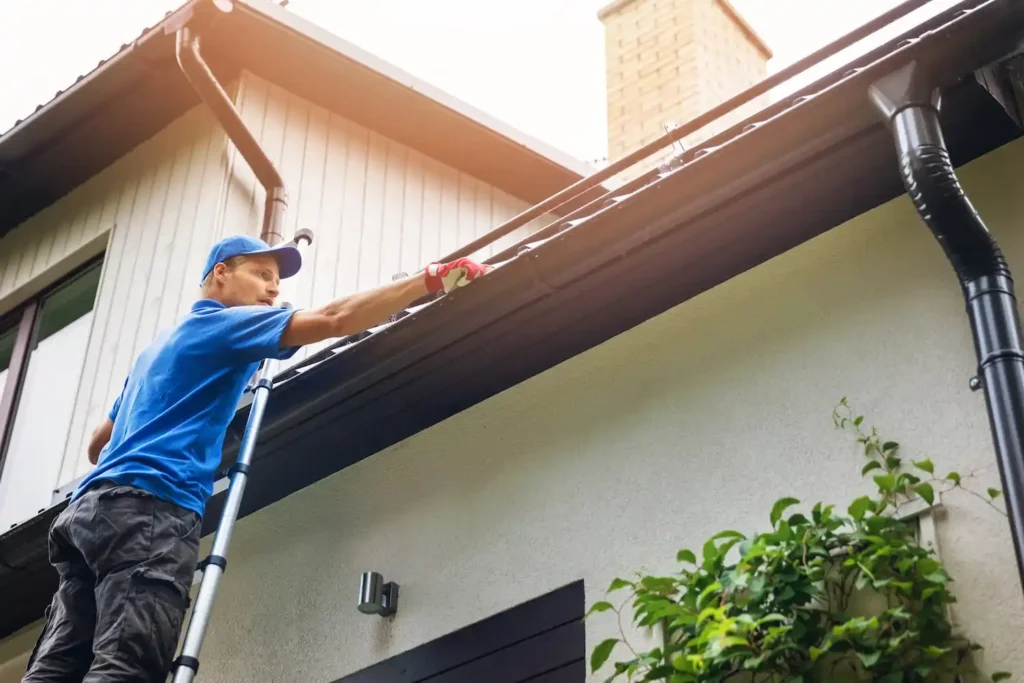
Before removing roofing shingles, prep the area by removing any loose nails, sweep away dirt and roofing debris, and release any adhesive that is present.
Next, draw a line across the roof with chalk. That way, you’ll know where to stop when removing the shingles. This will help ensure that you don’t damage the underlayment or the roof deck.
4. REMOVE THE OLD SHINGLES
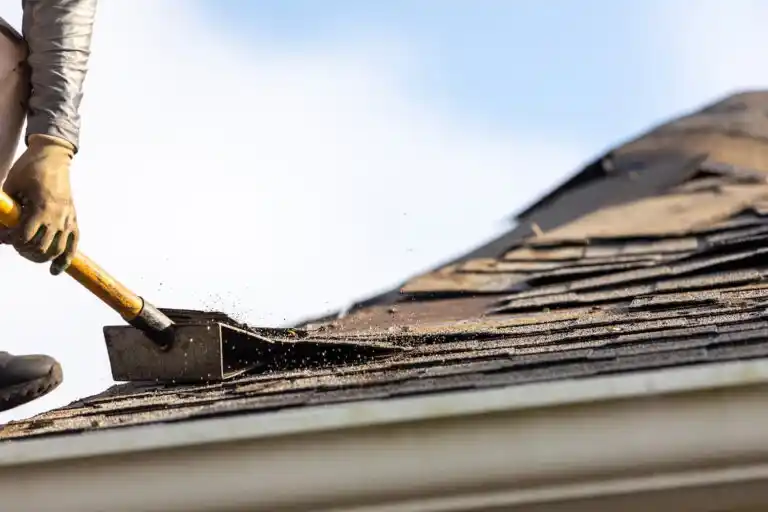
Once you’re ready, here’s what you should do. Start by securing the roofing jack on one side of the roof, and use it to lift a few shingles. Use the hammer jack to pull out nails from the lifted-up shingles, and the nail puller to remove any protruding nails.
Once all of the nails have been stripped away, use the flat pry bar to lift up the shingles. Remove all of the pieces and throw them away, then move on to the next row. Repeat until the entire roof has been cleared.
5. CLEAN UP 🧹
Once all the shingles have been removed, you’ll need to sweep away any remaining dirt and roofing debris. You may also want to use a magnetic sweeper to make sure you pick up any nails that were missed during the removal process. Finally, check the roof deck and make sure there are loose nails or other roofing elements stuck to it. If there are, use a razor knife to remove them.
Speaking of cleaning up, it’s a good idea to have a dumpster for the removed shingles. This will help keep the job site clean and safe, and make it easier for you when the time comes to dispose of the shingles.
SIGNS THAT YOU SHOULD REMOVE OLD ROOF SHINGLES 🏚️
Now that you know how to remove roofing shingles, you may be wondering when it’s time to do so. Generally speaking, shingles should be replaced when they start to curl and buckle. However, here are some telltale signs that’ll let you know when it’s time for a roofing shingle replacement or a new roof:
THE ROOF SHINGLES ARE CRACKED
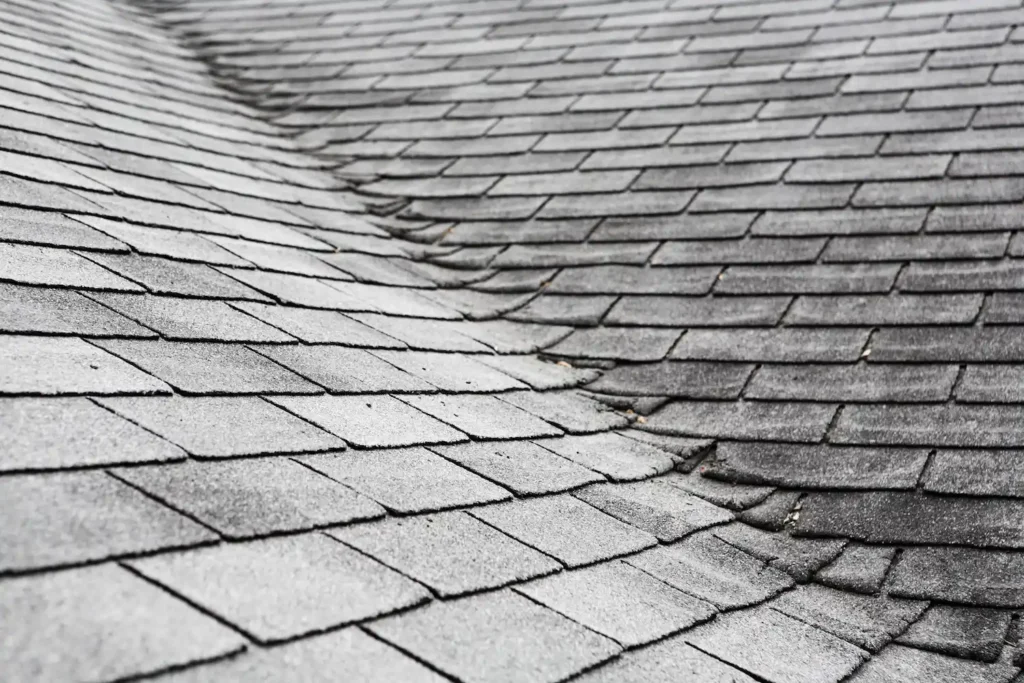
If you regularly inspect your roof, you may notice small cracks in the shingles or broken shingles. This can be caused by extreme temperatures, UV rays, or even a naturally occurring defect. In any case, these small cracks can quickly turn into large ones, leading to water damage and the need for a roof replacement. This is especially true for asphalt shingles.
THE ROOF SHINGLES ARE BLISTERING
Another sign that it’s time to replace your shingles is when they start to blister. This can happen when there is a buildup of moisture underneath the shingles, and it’s a sign that there is water damage. If left untreated, this can lead to costly repairs down the line.
MISSING SHINGLES
If you notice that there are stray shingles in your driveway, or that there are missing roofing shingles on your roof, this is a sure sign that all of them need to be replaced. Missing shingles allow moisture to penetrate the roof’s surface, which can lead to leaks and even structural damage.
If any of these signs apply to you, then you may need a new roof. It’s best to have a professional come and inspect your roof, as they’ll be able to provide the most accurate assessment of the situation. Plus, they can do a thorough inspection of your entire roof, not just the shingles. This will ensure that there are no other underlying issues.
CALL US FOR YOUR ROOFING NEEDS
If you’re looking for a professional roofer to remove your old shingles, give Mars Restoration a call. We provide residential and commercial roofing services, as well as repairs for doors, windows, and more.
To schedule a free inspection, reach out to us online, or if you have any questions, call us at 240-319-7311. We look forward to assisting you!
Jan 27, 2023 | Blog
When you’re in the market for a roof replacement or a fresh roof installation on a new construction build, you’ll probably start to hear a lot of terms you may be unfamiliar with. One of them is “flashing.”
No, there aren’t any flashing lights required in your roof replacement, but there is metal flashing! Roof flashing is actually an incredibly vital part of a protective roofing system. So, what is roof flashing exactly? And where does it need to get installed? Let’s take a closer look.
WHAT IS ROOF FLASHING?
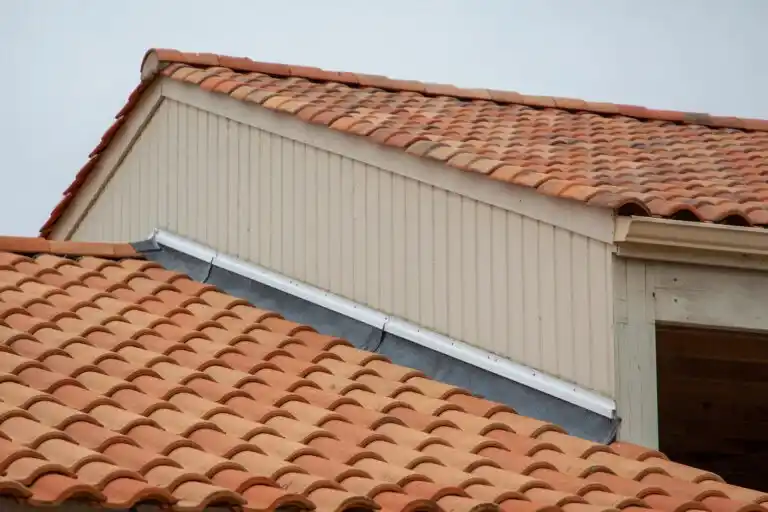
Roof flashing is a thin, flat piece of metal used to help waterproof certain areas on a roof. It is typically installed at the intersection of two roofing sections and around any roof protrusions to mitigate roof leaks. The installation placement is over the top of the underlayment (ice and water shield) but underneath the shingles. On metal roofs, flashing can be installed on top of the panels.
Flashing plays a vital role in protecting your home from water leaks. It works in tandem with the other aspects of a complete roofing system, such as:
- Decking
- Underlayment
- The outer layer of shingles
There are a few different types of metal that can be used for roof flashing.
- Steel: Steel, or galvanized steel, is commonly used for roof flashing. It typically has a zinc coating to protect against corrosion, which allows it to last even when exposed to moisture.
- Copper: If you want to make a statement with your roof, consider copper flashing. It’s the most durable and eye-catching (but also the most expensive) material. Keep in mind that it will form a green patina over time.
- Aluminum: Aluminum is an inexpensive flashing material that still has impressive durability. Since it’s malleable, it’s a good option for more complicated corners on your roof. It requires a protective coating to resist corrosion.
- Lead: As another incredibly durable metal, many homeowners prefer this option. Lead flashing can last for hundreds of years since it’s resistant to water damage!
5 TYPES OF ROOF FLASHING
When roof flashing gets installed by a professional roofing contractor, it should be installed in many different areas that are vulnerable to leaks. There are a few types of roof flashing based on where they get installed on your roof.
1) VALLEY FLASHING
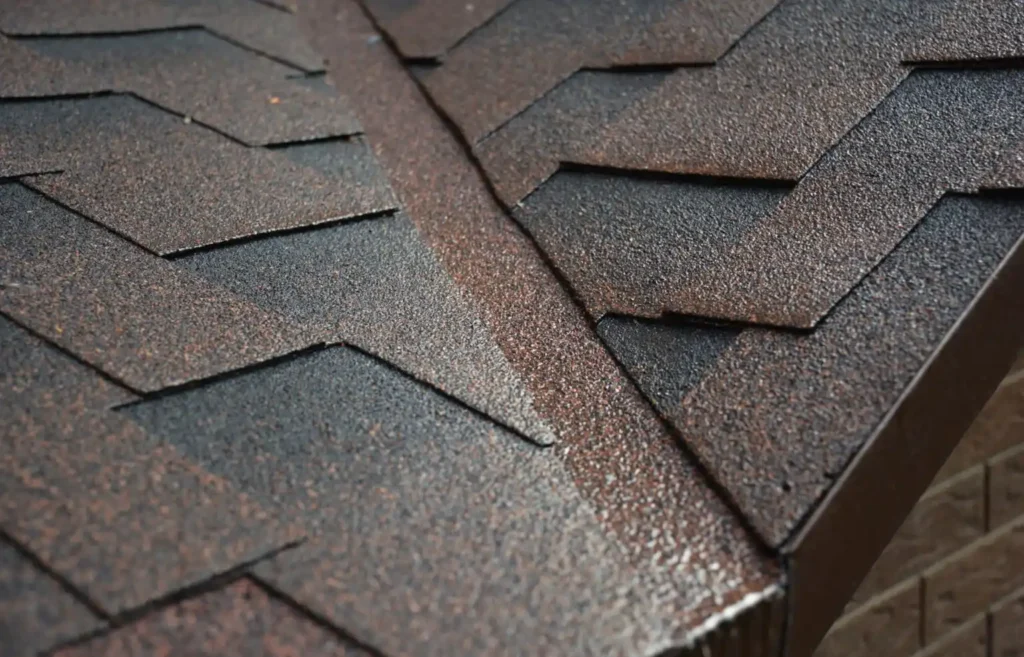
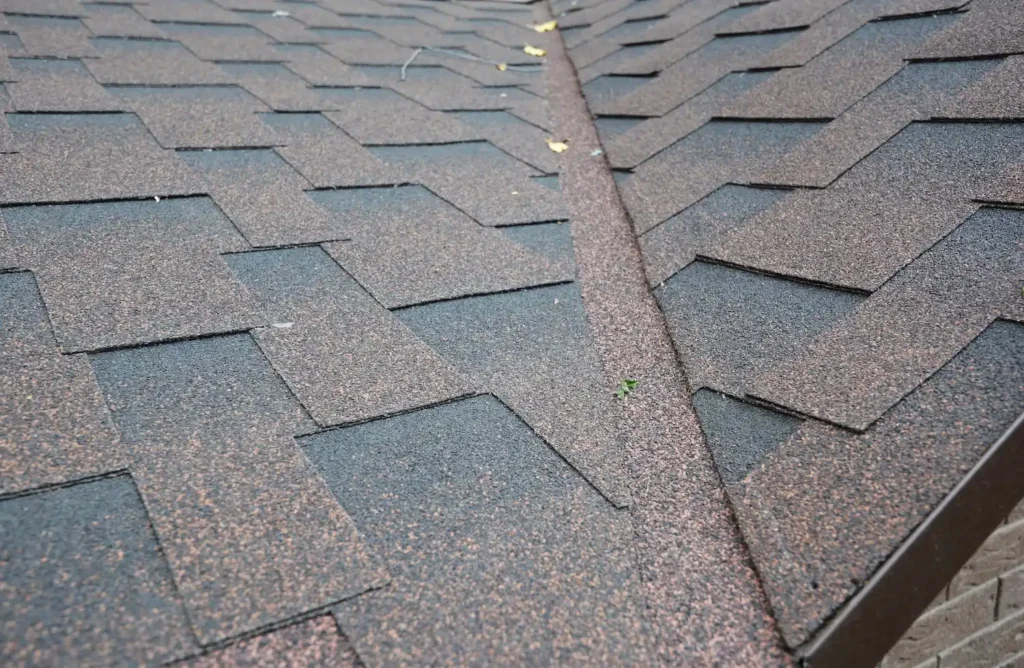
Roof valleys are the areas where two roof decks slope towards each other and connect. This creates a low line that looks like a valley out in nature. Roof valleys are a popular place for water to hit and collect.
Metal valley flashing gets installed over the underlayment and under the edges of the shingles. In these valleys, the shingles don’t overlap but instead form a thin gap that exposes the flashing. This helps the water to run down to the gutters and away from your roof.
2) BASE AND STEP FLASHING
Flashing is needed where the vertical walls of the house intersect the surface of the roof deck. The solution here is base and step flashing.
- Base flashing gets installed along the front walls. It gets installed underneath the siding and shingles but over the underlayment.
- Step flashing is used where the roof meets a side wall. Pieces get bent at an angle to match the roof pitch, and it is installed along the full length of the side wall. Step flashing is visible, so you can opt for a particular color to match your roofing material.
3) CHIMNEY FLASHING
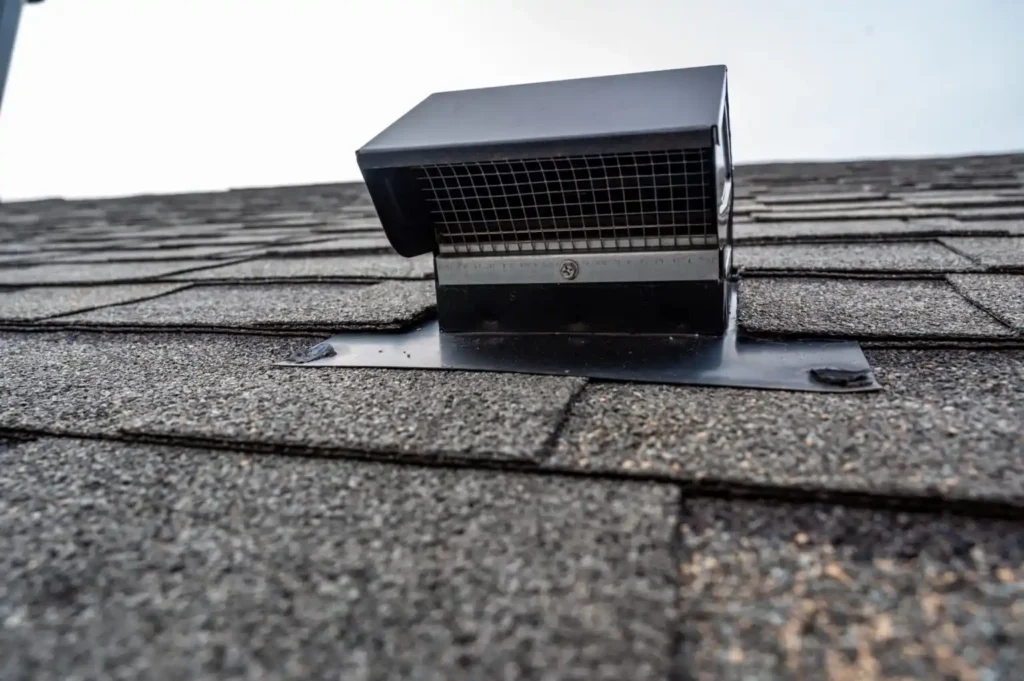
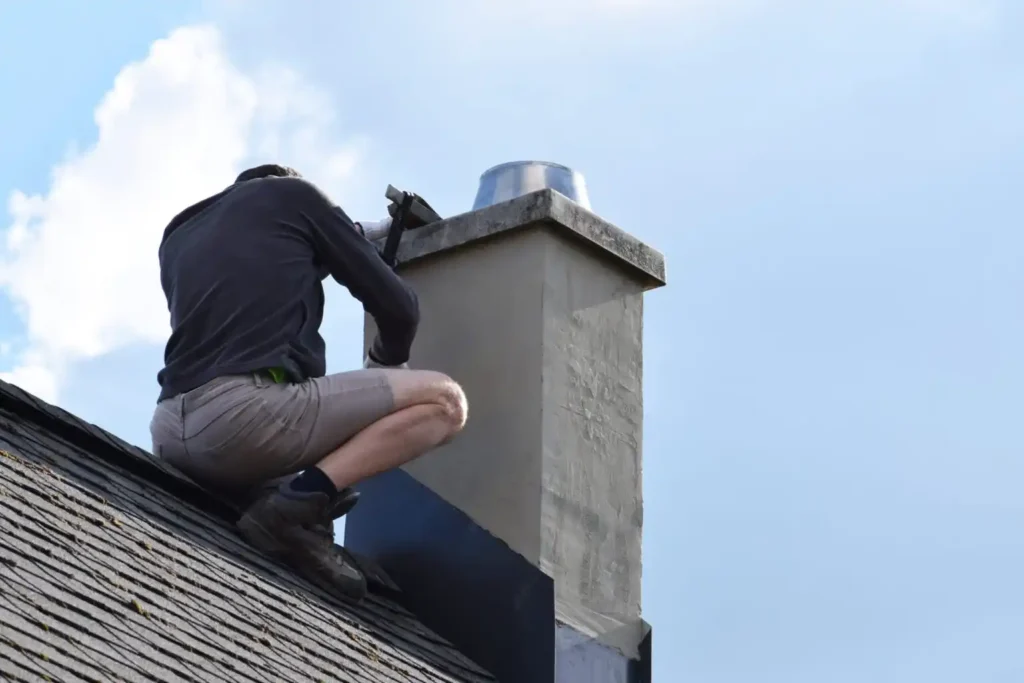
If you have a chimney, it’s, unfortunately, a hot spot for roof leaks. Chimney flashing is the best way to create a water-tight seal around the area. Other roof penetrations like vents and dormers will also need waterproof flashing.
4) SKYLIGHT FLASHING
Skylights are a wonderful feature to have, but they’re also another spot that’s prone to water leaks without the proper installation protocols. Without skylight flashing, your skylight can quickly cause a myriad of issues, such as:
- Roof rot
- Mold
- Water seepage
- Structural damage
5) DRIP EDGE FLASHING
We can’t forget about drip edge flashing! The drip edge is vital at the edges of your roof in order to direct water into your gutters and away from your roofing materials. This also helps prevent ice dams in winter.
Intense wind can lift shingles at the edges of your roof, so drip edge flashing is the next line of defense when this occurs.
DAMAGED FLASHING OR TIME FOR A ROOF REPLACEMENT? CALL MARS!
If you’re due for a total roof replacement soon, or if you need a flashing repair, trust a local, professional roofing company like Mars Restoration. With our detailed inspections, we’ll be able to pinpoint any flashing damage and create a clear description of the recommended repairs.
Call Mars today to schedule a free roof inspection!
Jan 22, 2023 | Blog
Have you ever needed a backup plan? It’s always wise to cover your bases in case your first plan falls through.
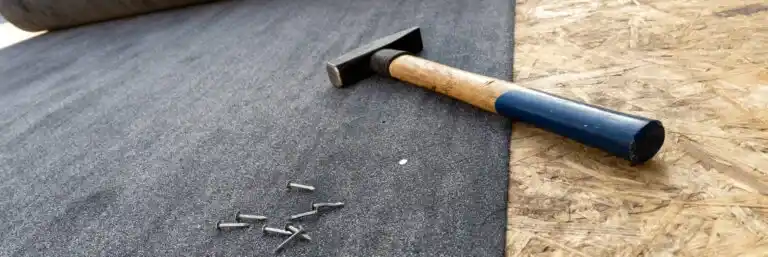
Our roofs also have backup plans in the form of underlayment. If for any reason, the shingles or other roofing materials get damaged, roofing underlayment is an extra line of defense against water damage.
Let’s take a look at:
- What is roof underlayment?
- The differences between the types of underlayment
WHAT IS ROOF UNDERLAYMENT?
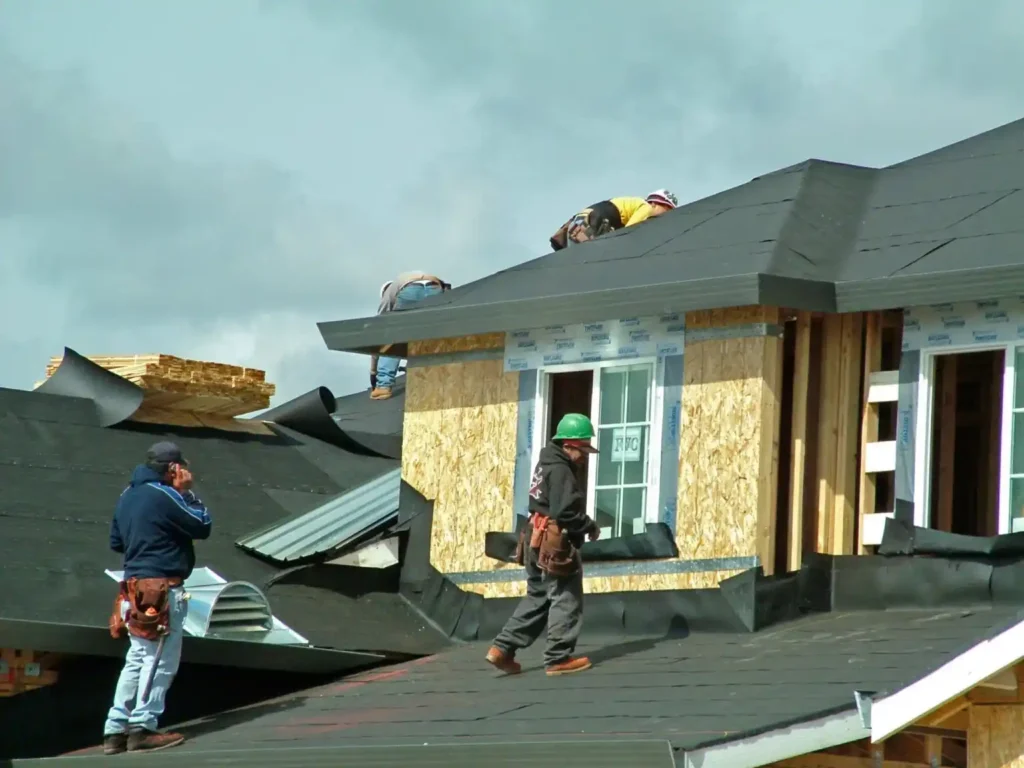
Roofing underlayment is the material between the shingles and the plywood roof deck. It gets installed directly on top of the roof deck in order to provide an additional layer of protection against:
- Snow ❄️
- Rain 🌧️
- Wind 🌬️
- Extreme heat 🥵
Underlayment should get installed across the entire surface of your roof decking. Additionally, it’s recommended for a waterproof underlayment to be added in the following areas that are prone to water collection and ice dams:
- Valleys
- Eaves
- Chimneys
- Vent pipes
- Skylights
Roof underlayment is an incredibly important component of a complete roofing system that helps keep your home dry. Trust us; you don’t want water damage in your home. It’s an expensive and tedious issue to fix, so always opt to stop the problem at the source by opting for a professional roof installation.
THE 3 MAIN TYPES OF ROOF UNDERLAYMENT
You have options when it comes to choosing the type of underlayment you want for your roof. Historically, roofing felt has been the most popular choice for underlayment, but in recent years, synthetic and rubberized asphalt underlayments have been been on the come up.
Let’s take a closer look at the pros and cons of all three options.
1) FELT UNDERLAYMENT
Felt roofing underlayment is made by saturating a fiberglass mat with asphalt. It’s one of the oldest and most commonly used types of underlayment in the industry. You can find roofing felt in No. 15 felt or No. 30 felt, with No. 30 being the stronger and thicker option.
✅ Felt Underlayment Pros
- Affordable cost
- Easily accessible
- Easy to install
❌ Felt Underlayment Cons
- More prone to tearing
- Weighs more
- Can wrinkle if exposed to moisture
- Less material per roll, leading to more seams
2) SYNTHETIC UNDERLAYMENT
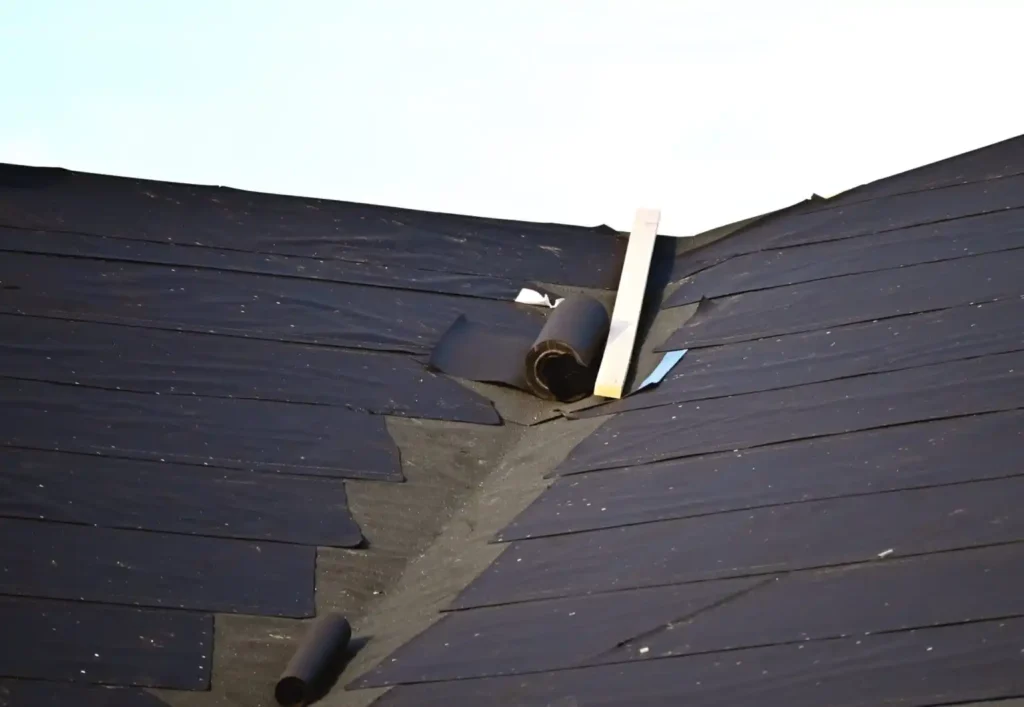
Even though roofing felt has been the go-to choice for many years, there’s a newer product that’s been in the spotlight lately. Synthetic underlayment is made from durable polymers that are actually melted-down recyclable materials. It’s now the preferred underlayment type of most modern roofing contractors.
Different roofing manufacturers usually make their synthetic materials different from one another, so be sure to do your research on the most high-performing brand.
✅ Synthetic Underlayment Pros
- More durable than felt
- Quick and safe to install
- Repels water effectively
- Can handle UV exposure during the installation process
- Lightweight
- Resistant to mold growth
- Easy for roofers to walk on during installation
❌ Synthetic Underlayment Cons
3) RUBBERIZED ASPHALT UNDERLAYMENT
Rubberized asphalt roofing underlayment is made from— you guessed it— rubber and asphalt. Rubberized asphalt is a peel-and-stick material like the other types of underlayments. The sticky, rubbery material allows it to form around nails and staples without causing punctures.
✅ Rubberized Asphalt Underlayment Pros
- Only fully waterproof underlayment
- Easy to install
- Lasts up to 50 years
- Resistant to UV rays
- Easy to repair
- Won’t wear down when roofers walk on it
- Excellent for humid regions and areas with intense winters
❌ Rubberized Asphalt Underlayment Cons
- Highest upfront cost of the three options
- Not all brands are fire-resistant
HOW TO CHOOSE THE RIGHT UNDERLAYMENT FOR YOUR ROOF
Any of these three options will help keep your roof protected against water damage. However, you can decide which underlayment you want based on your:
- Climate
- Roofing material
- Budget
For example, metal roofs can trap more heat, so they do best with synthetic underlayment. If you live in a temperate, mild climate, felt underlayment will serve you well. But if you live in a particularly humid region, you may opt for the extra waterproofing that comes with rubberized asphalt.
Ultimately, have a conversation with your roofing contractor. Feel free to ask them about the options you have and what they recommend. Some roofing companies may have exclusive partnerships with certain manufacturers, while others can install any manufacturer of your choosing. When it comes to an investment as significant as your roof, you deserve to be informed and educated!
GET A TOTAL ROOFING SYSTEM YOU CAN COUNT ON
It’s clear that roofing underlayment is an incredibly vital aspect of a functioning roofing system. To ensure you get a high-quality roofing system when you replace your roof, opt to hire a professional roofing company with many years of experience.
Here at Mars Restoration, we work with the best manufacturers in the roofing industry, and we take the time to educate you on all your options so that you can make an informed decision about your home and finances.
Reach out to Mars today for a free inspection!