

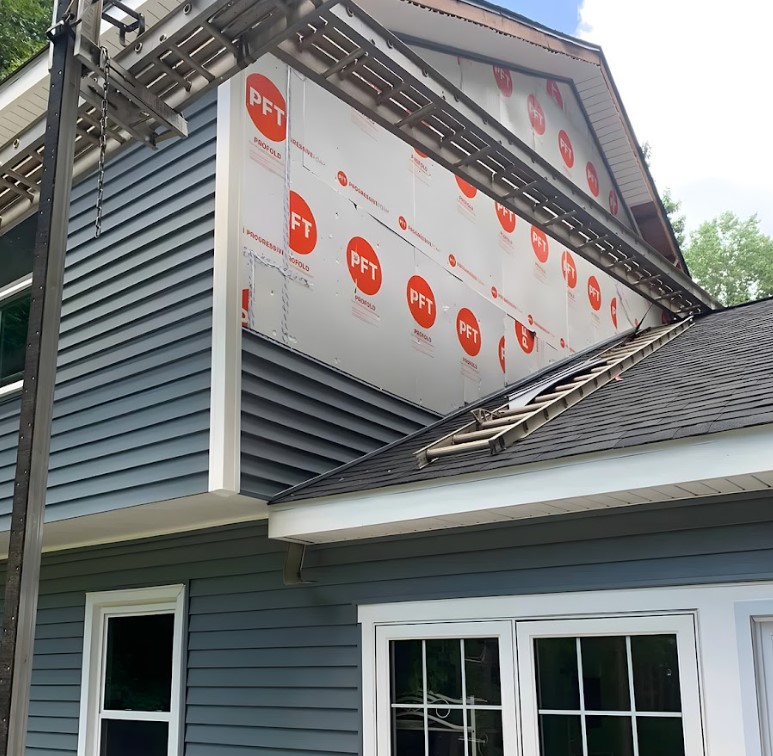
Here’s a question most homeowners don’t ask until it’s too late: was your siding actually designed for the climate you live in? Not the climate on a mild Tuesday in April. The real climate — the 95-degree August days with 80% humidity, the coastal air rolling in off the Chesapeake, the ice storms that hit in February and don’t apologize for it. Maryland and Northern Virginia don’t give your home’s exterior a gentle ride. They test it constantly, and the wrong siding material will tell you so within just a few years of installation.
The good news is that the right material makes an enormous difference. Choosing siding based on your actual climate — rather than just price or curb appeal — is one of the smartest investments you can make as a homeowner. This guide breaks down exactly what holds up and what doesn’t, so you can make a decision you won’t regret in five years.
Key Takeaways
- Climate-specific siding selection is one of the most important exterior decisions you’ll make.
- Humidity, heat, and coastal air each degrade different materials in different ways.
- Some of the most popular siding options handle the mid-Atlantic climate much better than others.
- Installation quality matters just as much as material choice — improper sealing defeats even the best product.
- MARS Roofing helps Maryland and Northern Virginia homeowners choose and install siding that’s built for where they actually live.
Why Does Climate Matter So Much When Choosing Siding?
Because the wrong material in the wrong environment doesn’t fail slowly — it fails visibly
Walk through almost any neighborhood in the DC suburbs or along the Maryland coast and you’ll find evidence of this everywhere. Siding that’s warped away from the wall. Paint that’s peeling in sheets. Panels that have absorbed so much moisture they’ve become a breeding ground for mold and mildew. These aren’t just cosmetic problems. They’re signs that a material was chosen for a showroom, not for a mid-Atlantic summer.
The mid-Atlantic region throws a combination of challenges at your siding that few other parts of the country match. You get intense summer heat paired with high humidity — a combination that causes many materials to expand, trap moisture, and eventually buckle. You get coastal air loaded with salt particles that accelerate corrosion and surface breakdown. And you get a real winter, with freeze-thaw cycles that exploit every small crack and gap in your exterior.
According to the U.S. Department of Energy, the building envelope — which includes your siding — plays a major role in both moisture management and energy efficiency. Choosing a material that can’t handle your local conditions undermines both, driving up your energy bills alongside your repair costs.
What Siding Materials Actually Hold Up in High Humidity and Heat?
Not all siding is created equal — here’s what performs when the mid-Atlantic does its worst
The market is full of siding options, and manufacturers will tell you each one is excellent. What they won’t always tell you is how each material behaves specifically under the conditions you face in Maryland and Northern Virginia. Here’s an honest breakdown.
Fiber cement siding is consistently one of the strongest performers in humid, hot climates. It’s made from a blend of cement, sand, and cellulose fiber, which means it doesn’t absorb moisture the way wood does and doesn’t expand and contract with temperature swings the way vinyl can. It resists rot, insects, and fire, and it holds paint exceptionally well — important in a climate where UV exposure is significant. Brands like James Hardie engineer their products specifically for regional humidity and temperature ranges, which makes fiber cement a particularly smart choice along the Chesapeake coast.
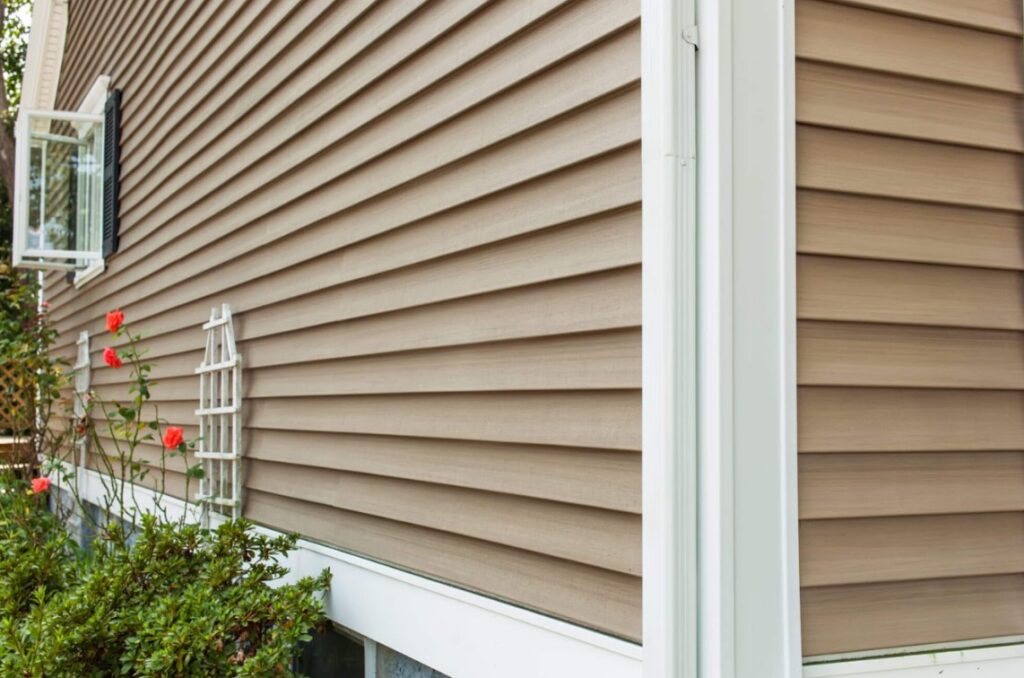
Vinyl siding is the most common choice in the region, and for good reason — it’s affordable, low maintenance, and doesn’t rot or rust. But it does have a limitation worth knowing: extreme heat can cause cheaper vinyl to warp and buckle, especially on south- and west-facing walls. If you go with vinyl, thicker panels and premium grades are worth the upgrade in this climate. Properly installed with the right expansion gaps accounted for, quality vinyl siding performs reliably for decades.
Engineered wood siding has improved dramatically in recent years. Products like LP SmartSide are treated to resist moisture and insects, making them far more durable than traditional wood in humid conditions. They offer the warm, natural look of wood without the high maintenance demands. That said, proper installation — especially around windows, doors, and trim — is critical to keeping moisture out.
What tends to struggle in this region:
- Untreated or poorly sealed natural wood, which absorbs humidity rapidly and requires constant maintenance to prevent rot and warping
- Lower-grade vinyl panels, which may warp in intense direct heat on exposed walls
- Any material that’s installed without proper moisture barriers, flashing, and sealant, regardless of how good the product itself is
The siding installation team at MARS Roofing works with all of these materials and helps homeowners understand which option makes the most sense for their specific home, orientation, and exposure before a single panel goes up.
How Does Coastal Air Make Siding Selection Even More Complicated?
Salt air is a slow, invisible adversary — and not every material can handle it
If your home is within a reasonable distance of the Chesapeake Bay, the Potomac River, or any tidal waterway, coastal air is a real factor in your siding decision. Salt particles carried on coastal breezes are mildly corrosive, and over time they work on fasteners, paint finishes, and the surface of siding materials in ways that inland homes never experience.
Metal fasteners on wood or fiber cement siding need to be stainless steel or hot-dipped galvanized in coastal environments — standard fasteners will rust and stain, and eventually fail structurally. Paint finishes need to be high-quality and properly applied, because salt air will accelerate peeling on anything that’s marginally applied. The National Association of Home Builders notes that coastal homes require more frequent exterior maintenance cycles precisely because of accelerated weathering from salt and moisture exposure.
This is why the installation process matters just as much as the product itself. A premium fiber cement panel installed with the wrong fasteners in a coastal environment will still fail early. Getting both the material selection and the installation details right — together — is what produces a siding job that actually lasts. That’s the approach the MARS Roofing team takes on every coastal and near-coastal installation in the region.
What Are the Signs That Your Current Siding Isn’t Handling the Climate Well?
Your siding will tell you it’s struggling — you just have to know what to look for
Most siding doesn’t fail all at once. It gives you signals first, and catching those signals early is the difference between a straightforward repair and a full replacement project.
Watch for these warning signs:
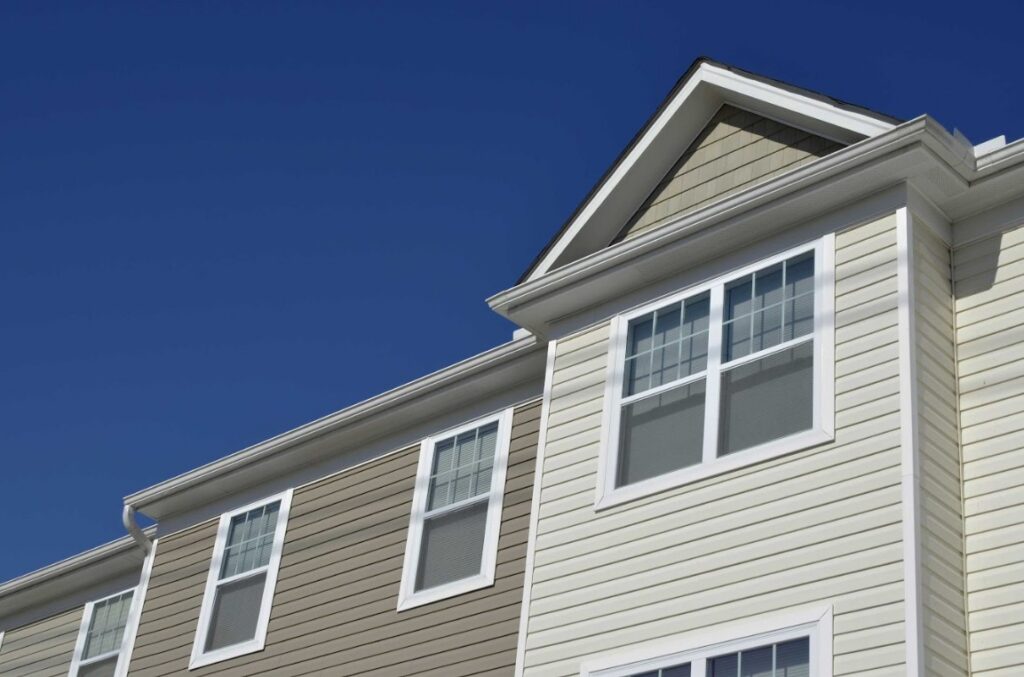
- Warping, bowing, or panels that have pulled away from the wall surface
- Discoloration, streaking, or persistent mold growth that returns quickly after cleaning
- Paint or finish that’s peeling, cracking, or chalking excessively within just a few years
- Soft spots or sponginess when you press against the wall — a sign of moisture damage behind the panels
- Noticeably higher energy bills, which can indicate that moisture has compromised your wall insulation
- Visible gaps at seams, corners, or around window and door trim where caulk has failed
If you’re seeing any of these, a professional inspection is the right next step — not to scare you, but to give you an accurate picture of what you’re actually dealing with before deciding on repair versus full replacement.
Your Exterior, Answered: Real Questions from Maryland and Northern Virginia Homeowners
What’s the single best siding material for the Maryland and Northern Virginia climate?
Fiber cement is the most consistently recommended material for this region’s combination of heat, humidity, and coastal air. It handles moisture, temperature swings, and UV exposure better than most alternatives. That said, the right choice also depends on your budget, your home’s style, and how close you are to the water.
How long should quality siding last in this climate?
Fiber cement, when properly installed and maintained, typically lasts 30 to 50 years. Quality vinyl can last 20 to 40 years. Engineered wood products generally fall in the 20 to 30 year range. In all cases, installation quality and regular inspection dramatically affect where your siding lands in that range.
Does MARS Roofing handle siding replacement as part of a larger exterior project?
Yes — and this is actually one of the biggest advantages of working with them. Because they handle residential roofing, siding, and gutters together, the integration between systems is done right the first time. No gaps in flashing, no mismatched warranties, no handoff between contractors.
Is it worth replacing siding before selling a home?
In most cases, yes. New siding has strong curb appeal and signals to buyers that the home has been cared for. More practically, it removes a potential negotiating point during inspection. Talk to a contractor before making that call — sometimes targeted repairs are the smarter investment.
How do I know if I need repair or full replacement?
If damage is isolated to a few panels and the underlying structure is dry and sound, repair is often the right move. If moisture has gotten behind the siding and into the sheathing or framing, replacement is usually necessary to address the root problem. A professional inspection gives you that answer without guesswork.
Make the Right Call for Your Home — Before the Climate Makes It for You
Your siding is the layer between your home’s structure and everything the mid-Atlantic throws at it. Humidity. Heat. Salt air. Freeze-thaw cycles. That’s not a mild operating environment — it’s a demanding one. And the material and installation quality you choose today will determine how your home holds up over the next 20, 30, or 40 years.
The team at MARS Roofing has been helping Maryland and Northern Virginia homeowners make smart, climate-informed siding decisions since 2014. They know this region, they know these materials, and they know how to install them the right way the first time — with the warranties to back it up.
If your siding is showing its age, or you’re simply not sure how it’s holding up behind the surface, reach out for a free exterior inspection. It costs you nothing and gives you a clear, honest picture of where things stand. That’s a pretty good trade.